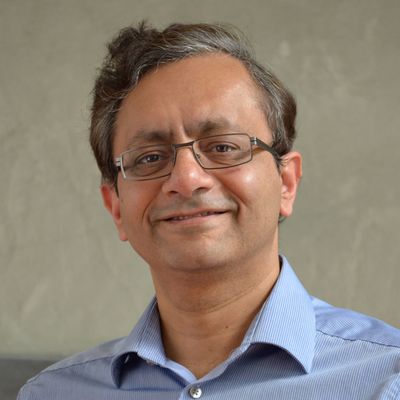
Schlumberger Centennial Chair Professor of Electrical and Computer Engineering, The University of Texas at Austin
Abstract: Due to a variety of reasons including privacy, scalability, bandwidth restrictions and robustness, data is often aggregated or obfuscated in various ways before being released to the public. Is it possible to learn predictive models on aggregated data that can even come close in the predictive performance or parameter recovery possible if the full-resolution (non-aggregated) data were available? This is a challenging problem that requires significant algorithmic innovation since simple ways of imputing the missing data and then learning a model can fail dramatically. In this talk I will present new approaches that are actually able to obtain reasonable results from aggregated data in certain scenarios.
Bio: rofessor Joydeep Ghosh is currently the Schlumberger Centennial Chaired Professor at UT Austin. He has worked on a wide variety of data mining and machine learning problems, resulting in 400+ refereed publications (including 90+ full length archival journal papers), several successful industrial projects and 16 best paper awards. Service to the community includes chairing top data mining conferences (KDD'11, SDM'12, SDM'13 etc), giving keynote talks (ICHI'15, ICDM'13, MCS, ANNIE etc), and consulting with a wide range of companies, from startups to large corporations such as IBM. He is currently Chief Scientist of CognitiveScale, which was selected by the World Economic Forum in 2018 as one of the 100 emerging companies worldwide most likely to benefit humanity.
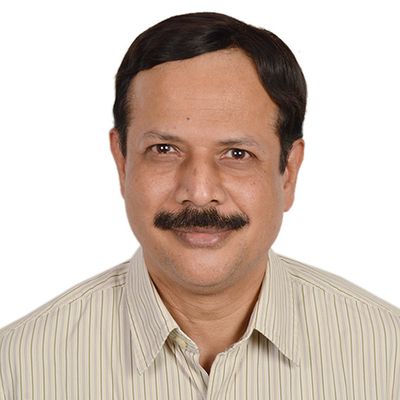
Senior Professor, Dept. of Computational and Data Sciences (CDS) & Dept. of CSA, Indian Institute of Science (IISc), Bangalore
Abstract: Relational database systems, the workhorse of today's information industry, have been extensively researched for over four decades, and a consensus has emerged on the implementation of most of their components. The design of the declarative query processing module, however, continues to be mired in challenging technical problems. In this talk, we will present promising new approaches to address these chronic difficulties.
Bio: Jayant Haritsa is on the faculty of the Computer Science & Automation department at the Indian Institute of Science, Bangalore, since 1993. He received a BTech degree from IIT Madras, and the MS and PhD degrees from the University of Wisconsin−Madison. He is a Fellow of ACM and IEEE.
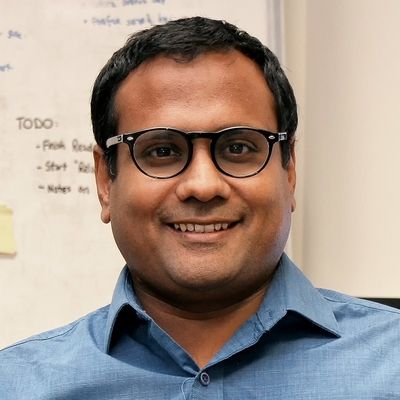
Associate Professor, Department of CS, Erik Jonsson School of Engineering & Computer Science, The University of Texas at Dallas
Abstract:Historically, Artificial Intelligence has taken a symbolic route for representing and reasoning about objects at a higher-level or a statistical route for learning complex models from large data. To achieve true AI, it is necessary to make these different paths meet and enable seamless human interaction. First, I will introduce for learning from rich, structured, complex and noisy data. One of the key attractive properties of the learned models is that they use a rich representation for modeling the domain that potentially allows for seam-less human interaction. I will present the recent progress that allows for more reasonable human interaction where the human input is taken as “advice” and the learning algorithm combines this advice with data. Finally, I will discuss more recent work on "closing-the-loop" where information is solicited from humans as needed that allows for seamless interactions with the human expert. I will discuss these methods in the context of supervised learning, planning, reinforcement learning and inverse reinforcement learning.
Bio: Sriraam Natarajan is an Associate Professor at the Department of Computer Science at University of Texas Dallas. He was previously an Associate Professor and earlier an Assistant Professor at Indiana University, Wake Forest School of Medicine, a post-doctoral research associate at University of Wisconsin-Madison and had graduated with his PhD from Oregon State University. His research interests lie in the field of Artificial Intelligence, with emphasis on Machine Learning, Statistical Relational Learning and AI, Reinforcement Learning, Graphical Models and Biomedical Applications. He has received the Young Investigator award from US Army Research Office, Amazon Faculty Research Award, Intel Faculty Award, XEROX Faculty Award and the IU trustees Teaching Award from Indiana University. He is an editorial board member of MLJ, JAIR and DAMI journals and is the electronics publishing editor of JAIR. He is the organizer of the key workshops in the field of Statistical Relational Learning and has co-organized the AAAI 2010, the UAI 2012, AAAI 2013, AAAI 2014, UAI 2015 workshops on Statistical Relational AI (StarAI), ICML 2012 Workshop on Statistical Relational Learning, and the ECML PKDD 2011 and 2012 workshops on Collective Learning and Inference on Structured Data (Co-LISD). He was also the co-chair of the AAAI student abstract and posters at AAAI 2014 and AAAI 2015 and the chair of the AAAI students outreach at AAAI 2016 and 2017.
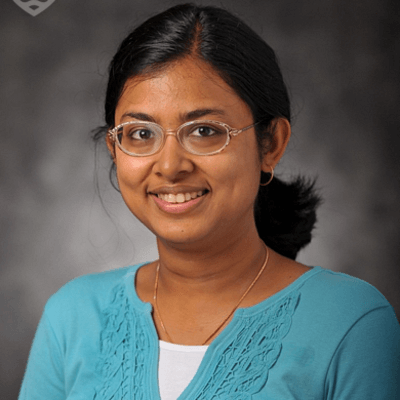
Assistant Professor, Department of Electrical Engineering, Indian Institute of Science, Bangalore, India
Abstract: Due to increase in the number of sources of data, research in cross-modal matching is becoming an increasingly important area of research. It has several applications like matching text with image, matching near infra-red images with visible images for night-time or low-light surveillance, matching sketch images with pictures for forensic applications, etc. This is an extremely challenging task due to significant differences between data from different modalities.
In this talk, I will discuss about the different challenges of this problem and also some of the approaches we are working on for addressing this. In addition, I will also touch upon some related problems, like zero-shot learning and low-resolution face recognition.
Bio: Dr. Soma Biswas is an Assistant Professor in the Electrical Engineering department in IISc. She received her PhD degree in Electrical and Computer Engineering from University of Maryland, College Park, in 2009. Then she worked as a Research Assistant Professor at University of Notre Dame and as a Research Scientist at GE Research before joining IISc. Her research interests include image processing, computer vision, and pattern recognition.

IBM Research
Abstract: Fashion designers and fashion houses usually start conceptualizing and designing products for the new season six months to one year prior to the actual selling season–though in recent times this has been drastically reduced with the emergence of fast-fashion retailers. That’s why for most apparel retailers, and the fashion industry in general, knowing the trends customers would like to wear next season is extremely important. This talk will describe how AI based tools which can understand fashion images and articles can be used to provide a more data-driven approach for trend analysis and forecasting. I will also describe some of our recent collaborations with various fashion designers.
Bio: Vikas C. Raykar works as a researcher at IBM Research, India. An expert in machine learning he is currently focused on building machines that can understand natural language and images in par with humans. He finished his doctoral studies in the computer science department at the University of Maryland, College Park. He is also defining a roadmap for what can be done for the fashion industry, primarily leveraging deep image and text understanding together with other AI capabilities.